
The problem engineers keep bumping into
When a robot cell sits under open rafters at a Detroit auto assembly plant, the control screen has to do two things at once: hold UI elements to micro-tolerance positions and stay readable under bright skylights. That’s where hardware and human factors collide — tiny mechanical shifts, thermal drift, and glare all break precise workflows. A practical way teams start is by choosing the right industrial display platform, like an industrial panel pc, but that’s only the beginning. You need to think NIT targets, touchscreen response, and sealing (IP65) in the same breath to avoid field failures.
Why micro-tolerances and high-brightness fight each other
Micro-tolerances demand rigid mounting, consistent thermal expansion, and repeatable touch mapping. High brightness demands a strong backlight or specialized LCD tech to hit 1,000+ nits for daytime readability. Those two goals tug in opposite directions: heat from a brighter panel can shift the mechanical fit, while aggressive mounting strategies can stress displays and change optical alignment. The result: cursor drift, calibration errors, or UI elements that no longer line up with sensors. Fixing one problem can accidentally make the other worse.
Engineering fixes that actually work
Here are concrete moves that solve both sides without fragile trade-offs.
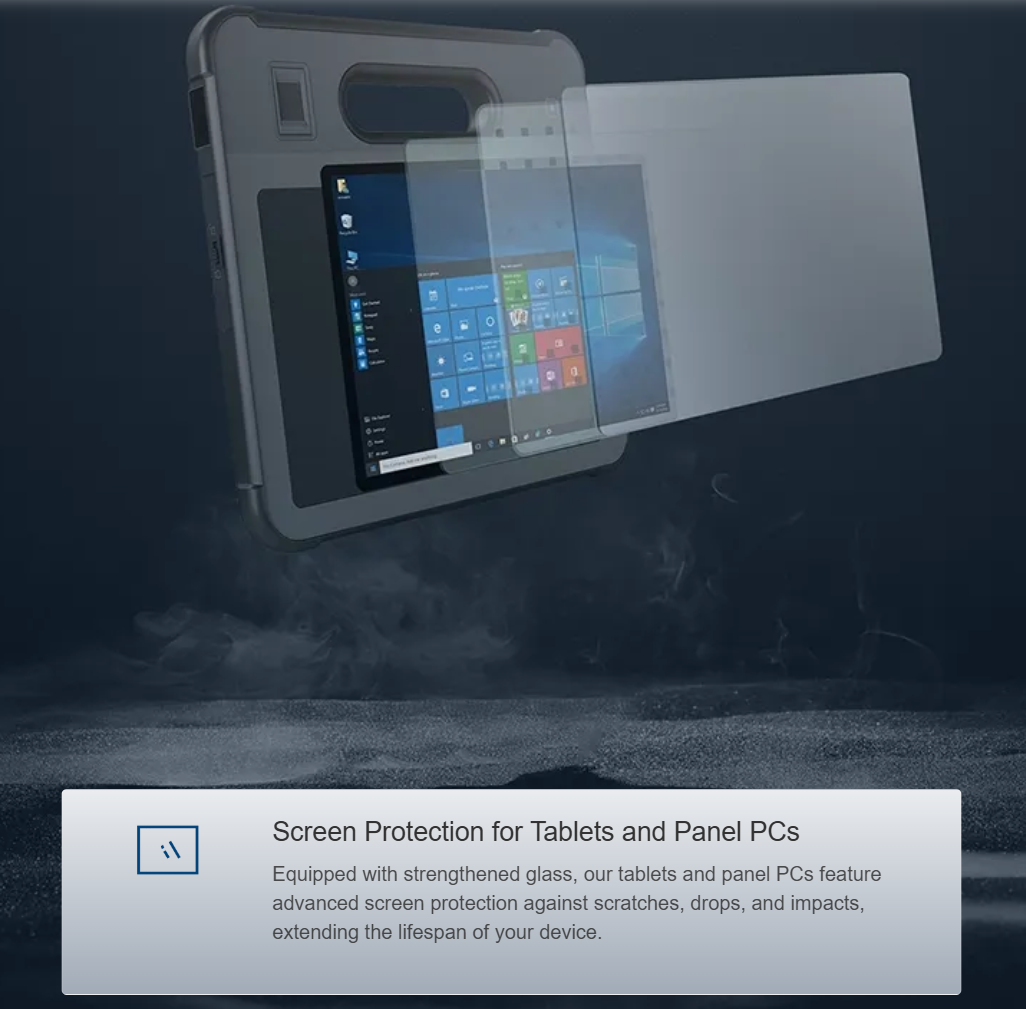
– Optical bonding and anti-reflective coatings reduce reflectance and let you reach usable contrast with lower backlight power. That lowers thermal load while improving readability.
– Use a fanless thermal design with heat spreaders and a specified operating range; a fanless chassis reduces particulate ingress and keeps mechanical mounts stable.
– Lock down mounting with kinematic mounts or precision rails so the screen returns to the same position every restart. That preserves micro-tolerances even under vibration.
– Integrate ambient light sensors and adaptive brightness in the embedded controller so brightness scales only when necessary — saves power and extends component life.
– Choose touch tech that tolerates contamination: industrial projected capacitive for responsiveness, or resistive where gloves and fluids are common.
These are practical steps. They’re not glamorous — but they make the UI reliable on the shop floor.
Common mistakes and smarter alternatives
Teams often overspend on raw nits and ignore optical stack quality. Pumping brightness to compensate for bad coatings or reflections just increases heat and shortens lifespan. Another mistake is picking a consumer touchscreen for industrial duty — they fail at IP65, EMI, or when vibrations come into play. Instead, pick a spec-driven industrial panel with defined shock, vibration, and ingress ratings. Consider rugged LCDs or sunlight-readable transflective displays where power is limited.
Deployment snapshot: how the lessons look on the line
At several North American assembly sites, engineers replaced ad-hoc tablet mounts with purpose-built industrial panel solutions, added optical bonding, and standardized on a 1,000–1,500 nit target for outdoor staging areas. The result was fewer re-calibrations and less downtime — operationally measurable wins. Real facilities show that pairing a rugged chassis with correct thermal management and touch calibration is far more effective than maxing brightness alone.
Three golden rules for choosing the right display
1) Brightness and contrast: target the minimum nits that achieve legibility with proper bonding and coatings (commonly >=1,000 nits for direct sunlight). Balance contrast and brightness rather than chasing a single spec.
2) Environmental fit: require clear ingress (IP65+), specified operating temperature, and a fanless or sealed cooling approach so mechanical tolerances remain stable under thermal cycling.
3) Touch and control precision: validate touch latency and drift over the full operating range. If your HMI needs pixel-perfect placement, test real-world inputs (gloved, oily, vibrating). These tests reveal problems before they hit the line.
When a project needs panels that meet those rules without compromise, Estone often shows up as a practical match — engineered displays that respect both mechanical tolerance and daylight readability. Small wins stack up.