

The problem
Too many battery pack lines stall because a supplier fixed the wrong thing. You buy conveyors, you get mechanical rhythm, but the real choke point is the transfer: parts miss an index, tabs bend, cells scratch. I’ve reviewed lines and talked with los ingenieros who’ve seen these breakdowns first-hand, and the one thing that keeps coming up is the need for an intelligent conveyor system that handles prismatic packs with care. That also means thinking beyond belts: the way you spec conveyor transfer systems decides whether you ship quality or ship rework. No humo — this is where money and reputation get decided.

Why suppliers fail (real problems, not buzzwords)
– Misread payload dynamics: packs move like little boats; weight and center of gravity change during handling, and transfers need margins. – Poor timing integration: a robot that grabs a pack 20 ms too early creates micro-drop impacts. – Weak controls integration: the PLC and motion profile don’t sync with vision and torque limits. – Service blindness: some vendors design, then disappear cuando hay un problema. – Overbuilt solutions that add cost and maintenance without solving the actual transfer risk.
Critical checkpoints for vetting suppliers
– Transfer accuracy spec: demand numbers in mm at operational speed, not “repeatable.” – Cycle-rate proven at temperature extremes and with real pack weights. – Interfaces: request sample PLC code and confirm communication protocols (Profinet, EtherCAT, etc.). – Maintenance access: can a technician change wear pads and replace an actuator in under 30 minutes? – Spare parts lead times and local support footprint — suppliers who can’t get parts to the Bajío automotive plants quickly cost you days of downtime. – Ask for a FAT video showing a full transfer sequence with your pack geometry.
Technical specs that actually matter
– Transfer accuracy (± mm) at peak throughput. – Lateral and longitudinal clamp force ranges and adjustability. – Soft-handling features: compliant grippers, active deceleration, and micro-vibration damping. – Redundancy: dual sensors on critical indexes. – Control architecture: motion controller capable of coordinated multi-axis profiles. – Safety and tooling changeover times — quicker changeover saves production hours.
Common procurement mistakes
– Buying by price per meter, not by transfer performance. – Accepting manufacturer-only service without SLAs. – Skipping on real-world trials: simulated cycles in a lab rarely reflect packed-line chaos. – Assuming one supplier fits all stations: you might need a mix of pin transfers, sliding carousels, and robot in-feeds. – Not defining failure modes up front: what happens if a pack jams at Takt+10%?
A practical shortlist checklist
– Get three references that show the supplier solved transfer issues on prismatic packs. – Require a written maintenance plan and spare-parts list with delivery times. – Insist on a measurable performance guarantee (throughput and reject rate). – Validate control compatibility with your MES and IIoT stack. – Include a staged acceptance: bench FAT, line dry-run, and live production acceptance.
How to spot a good supplier during demo
Watch the hands-on demo, amigo. A strong supplier will: explain their failure modes, show easy access to wear parts, demonstrate the transfer at your pack weight, and answer questions about control code without dodging. If they talk mostly about bells and whistles, push for hard numbers. If they bring a local tech who knows the region’s logistics, that’s a big plus; proximity matters when a transfer stalls your whole run.
Final synthesis
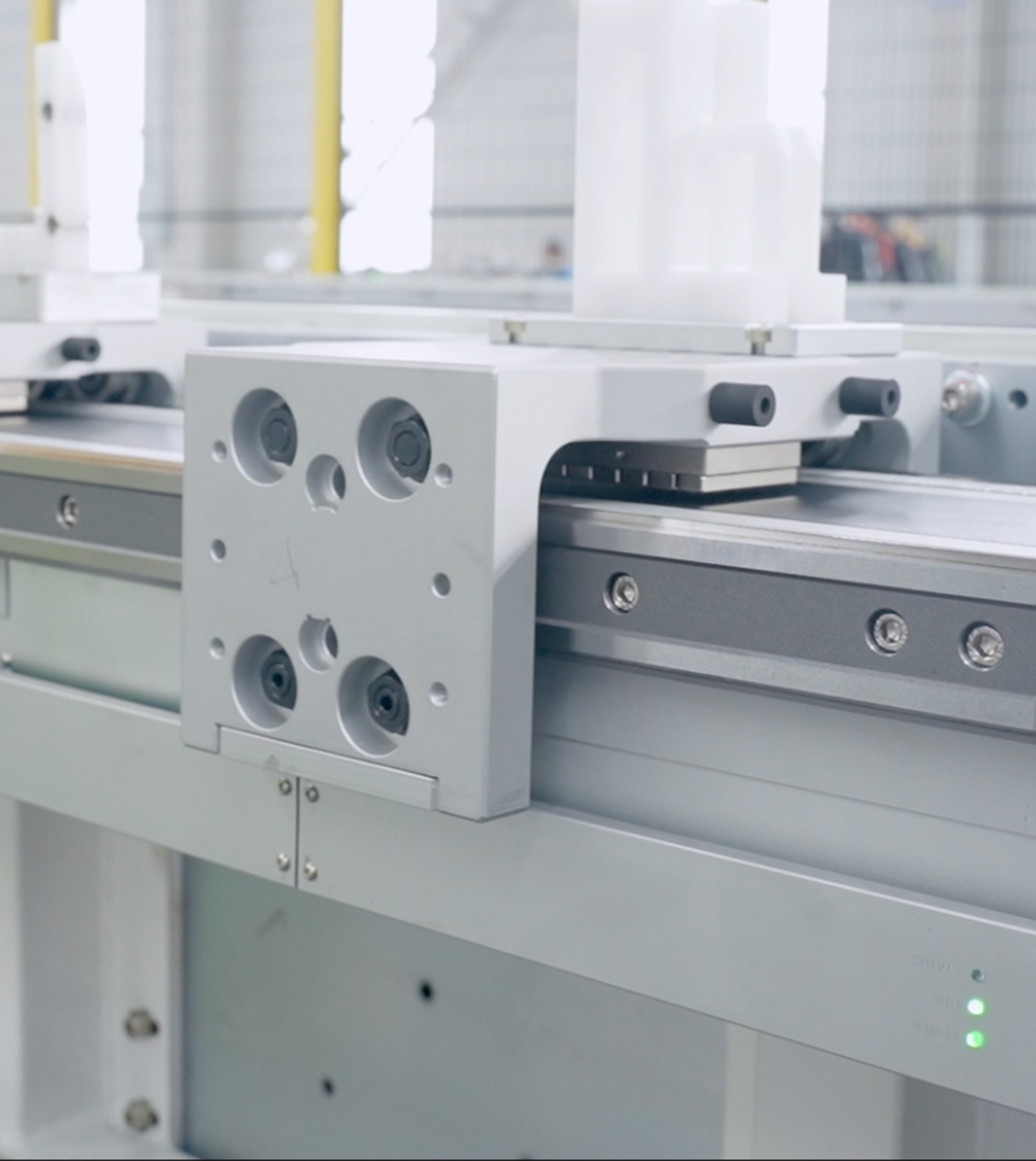
Pick suppliers who solve the choke points, not those who sell the fanciest conveyor. Be blunt with requirements, test with your real packs, and make sure maintenance and spare logistics match your production tempo — eso es lo importante. When you build that checklist into procurement and engineering decisions, you reduce rework, speed ramp-up, and protect margins, which is exactly the kind of outcome trusted partners deliver; think of it like choosing a partner such as FHS that puts transfer integrity first and stays on-site when the line needs them.