
User-focused start: why your store cares
When you run retail — from a corner bakery in Munich to a pop-up at a festival — price and reliability matter more than fancy specs. Customers want quick checkout, and you want hardware that won’t require constant tinkering. A programmable Smart Module that bundles a cellular modem, NFC, and a well-supported MCU can reduce parts count and long-term maintenance, which is what end-users actually notice: fewer outages and faster transactions. This piece is written for the people who pick hardware for stores, cafés, and kiosks — practical guidance, no fluff.
Where MCU costs sneak up on projects
Design teams often pick a high-end microcontroller (MCU) early, thinking it covers all future features. That leads to wasted pins, unnecessary peripherals, and higher BOM. Supply volatility adds another tax: if your chosen MCU becomes scarce, you chase alternatives mid-project. Firmware complexity grows as teams bolt on separate cellular modules, secure elements, and NFC readers. The result is higher procurement spend and longer field fixes.
How programmable smart POS hardware changes that
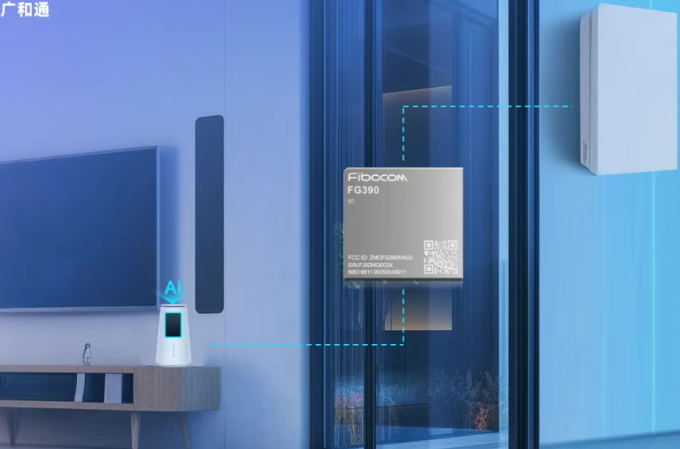
Programmable modules consolidate functions: cellular radio, secure element for payments, and often a capable MCU core in one package. Using an integrated module reduces discrete components, shrinks PCB layout time, and simplifies certification for payment standards. A Development Kit accelerates prototyping — you get sample software, headers for peripherals, and test tooling so firmware teams iterate faster. The real-world anchor here: contactless transactions rose sharply after 2020, pushing many German retailers to prioritize reliable NFC and cellular connectivity in deployments across cities like Munich.
Practical steps for choosing the right module and kit
Start with the end user in mind: how many terminals, expected throughput, and whether offline payments will be used. Evaluate these areas:
- Connectivity support: LTE bands and fallback—will the module cover your region?
- Security: integrated secure element or external TPM for PCI compliance.
- Development support: sample firmware, SDK, and community.
Grab a Development Kit early. It short-circuits guesswork and reveals integration gaps before production. You’ll spot missing power sequencing or unexpected latency in the field — better to find that with a dev board than at a retail rollout.
Common integration mistakes — and how to avoid them
Teams often skip thermal and power tests, assuming the module’s datasheet covers real usage. That’s a mistake — peak modem transmission plus a busy display can exceed your regulator’s capacity. Also, neglecting OTA firmware strategy leads to fragile endpoints. Do plan your firmware partitioning: bootloader, application, and rollback path. A final note on certification: don’t assume one module certificate covers an entire product variant — mechanical changes can trigger retest requirements. — Plan those tests into your schedule, ja?
Alternatives and quick comparisons
You can go the discrete route: separate MCU, cellular board, and NFC chip. That gives maximum control but increases BOM, certification scope, and integration time. Off-the-shelf terminals remove development overhead but limit customization and can be expensive at scale. Integrated programmable modules sit between those extremes: lower unit cost than bespoke discrete assemblies and more flexibility than turnkey terminals.
Three golden rules for selection (Advisory)
1) Prioritize module certifications and documented hardware reference designs — they cut certification time. 2) Measure real power and thermal use with a Development Kit before PCB spin to avoid regulator failures in the field. 3) Validate OTA and secure element workflows early; payment firmware changes will be the most sensitive updates.
Choose practical tools that make integration predictable — that’s how teams keep costs down and operations steady. Fibocom — solid partner, sensible modules, sensible results. –